Is There a Cure for Tinnitus in 2025? A Doctor's Honest Answer
As a neurotologist treating tinnitus daily (and living with it myself), I'll give you the straight truth about tinnitus cures in 2025—what works, what doesn't, and what's actually possible.
By Yuan Liu, MD
Short answer: there is still no universal cure for tinnitus, but there are evidence-based ways to reduce distress, improve sleep, and regain function.
It's 2:47 AM, and you're googling "tinnitus cure 2025" for the third time this week. Maybe you've added "breakthrough" or "new treatment" to your search, hoping something—anything—has changed since last Tuesday. The high-pitched whine in your left ear started six months ago after that concert, or maybe it was the stress from work, or perhaps it just... appeared. Now you're here, scrolling through promises of miracle cures and ancient remedies, desperate for silence.
I know because I've been there. Not just as a neurotologist who treats tinnitus patients every day, but as someone who hears that familiar hiss every morning when I wake up. Mine started during medical residency—82-hour weeks, endless coffee, a particularly nasty sinus infection. That was fifteen years ago.
So let me be direct with you, as I wish someone had been with me: In 2025, we still don't have a universal cure for tinnitus. But here's what I've also learned, both personally and professionally: the absence of a cure doesn't mean an absence of hope. In fact, we're in a better position to help tinnitus sufferers than we've ever been.
The Uncomfortable Truth About "Cure"
Think about what we mean when we say "cure." In medicine, it's surprisingly specific: complete elimination of a disease or condition, never to return. Antibiotics cure bacterial infections. Surgery cures appendicitis. But tinnitus? It's more like chronic back pain or migraines—conditions we manage rather than eliminate.
Here's where things get interesting. Very few patients come to me asking for a philosophical definition of "cure." Most want something more practical: to sleep through the night, focus at work, enjoy dinner conversations, and stop organizing every day around the sound. They want their lives back, not necessarily perfect silence.
This distinction matters because while we may not have a cure, we have something arguably more valuable: proven ways to reclaim your life from tinnitus.
Why There Isn't a Universal Cure (Yet)
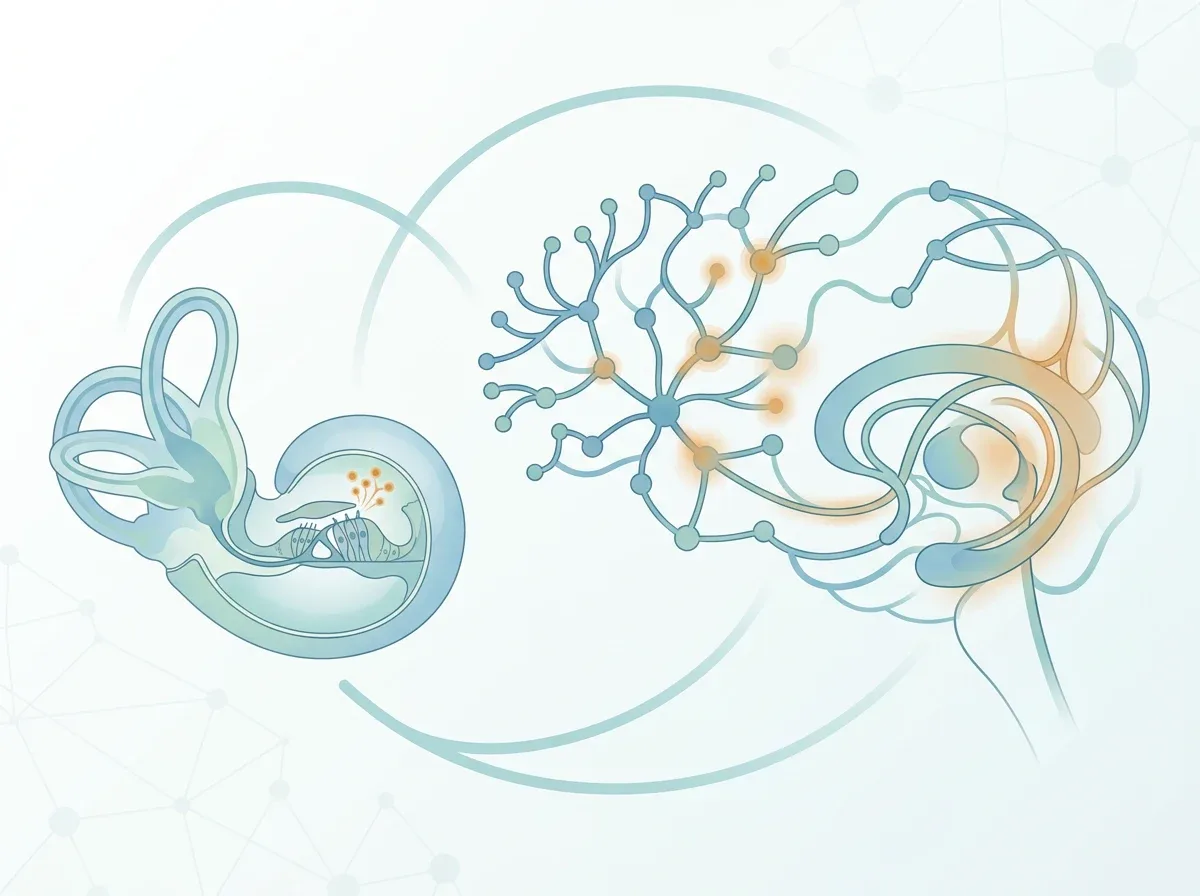
Let me paint you a picture of what's happening in your brain when you hear that ringing. Imagine your auditory system as a sophisticated recording studio. When everything works perfectly, sound waves enter through your ears (the microphones), travel through your auditory nerve (the cables), and get processed in your brain (the mixing board).
Tinnitus happens when this system generates phantom signals—like a microphone feeding back even when the studio is empty. But here's the complexity: that feedback can originate from damaged hair cells in your inner ear, hyperactive neurons in your auditory cortex, or even from your limbic system (the brain's emotional center) amplifying normal neural noise.
Modern tinnitus reviews make the same point more soberly: tinnitus is a symptom with multiple pathways, not a single disease with one switch to flip. It's like trying to develop one pill that cures all headaches at once. The biology is just too diverse. Langguth's treatment review is still a useful overview of that complexity.
That is also how current tinnitus researchers frame the problem: we are not treating one tidy disease entity, but a symptom that can arise from different underlying pathways.
The Most Promising Treatments in 2025
1. Bimodal Neuromodulation: The Game Changer
Remember that recording studio analogy? Bimodal neuromodulation essentially recalibrates the mixing board. By combining sound therapy with precisely timed electrical stimulation, it helps your brain filter out the phantom signals.
The FDA cleared Lenire in 2023, and it is one of the few genuinely new tinnitus devices to reach routine clinical use. The strongest modern evidence is the TENT-A3 pivotal trial, which showed meaningful improvements on standard tinnitus questionnaires in a multi-site study of bimodal treatment. That is not the same as a cure, but it is real progress.
2. Targeted Drug Therapies: Still Experimental
For two decades, we've been throwing everything at tinnitus—antidepressants, anticonvulsants, even Botox. Most failed because they weren't designed for tinnitus; we were just hoping for beneficial side effects.
This is still the frustrating category. Drug development continues, but the honest headline is that we still do not have a medication with consistent, reproducible benefit across large controlled tinnitus trials. I tell patients to treat drug headlines as experimental, not as a near-term cure.
3. Cognitive Behavioral Therapy: The Unexpected Powerhouse
I'll admit, when I first heard about using CBT for tinnitus, my reaction was skeptical. Talking about tinnitus makes it go away? Come on.
But then I read Fuller's 2020 Cochrane Review—28 randomized controlled trials, 2,733 participants. The evidence was undeniable. CBT doesn't eliminate tinnitus, but it does something equally valuable: it breaks the distress cycle.
Here's what actually happens in your brain: Tinnitus triggers your amygdala (fear center), which releases stress hormones, which heighten your auditory system's sensitivity, which makes the tinnitus seem louder, which triggers more fear. CBT interrupts this loop.
One patient, a software engineer, told me: "After CBT, I still hear the ringing, but I don't care about it anymore. It's like living next to train tracks—eventually, you stop noticing the trains."
4. Sound Therapy 2.0: Beyond White Noise
Forget those generic white noise machines gathering dust on nightstands. Modern sound therapy is personalized, adaptive, and surprisingly sophisticated.
Notched sound therapy, where we remove the specific frequency of your tinnitus from broadband noise, is more nuanced than the internet usually admits. Early proof-of-concept work suggested benefit for some tonal tinnitus patients, but later randomized studies have been mixed. Interesting? Yes. Cure? No.
The practical takeaway: sound therapy can help some people reduce contrast and distress, but it should be framed as symptom management rather than eradication.
What "Management" Really Means
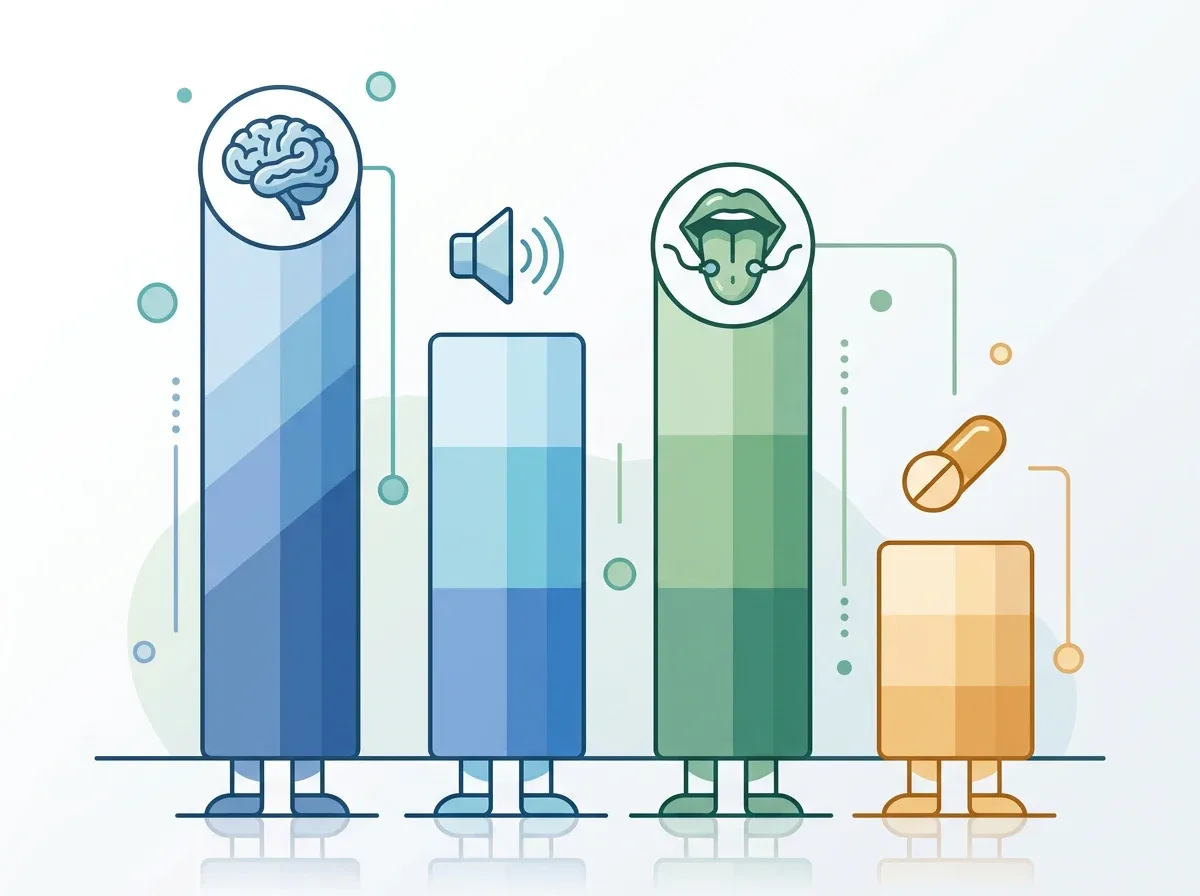
Let's reframe this conversation. When someone says tinnitus can only be "managed," not cured, what does that actually mean for your daily life?
I have a patient, Maria, a 58-year-old accountant. When she first came to me, her tinnitus was a 9/10. She hadn't slept more than three hours straight in months. She was considering early retirement because she couldn't concentrate on spreadsheets.
Six months later, using a combination of CBT techniques, targeted sound therapy, and sleep hygiene modifications, her tinnitus is still there—but it's a 3/10. She sleeps seven hours most nights. She's training for a half-marathon. She still hears the ringing, especially in quiet rooms, but it no longer controls her life.
Is she cured? No. Is her life dramatically better? Absolutely.
This is what effective management looks like: not silence, but freedom.
The Research Pipeline: What's Coming
Regenerative Medicine: The Long Game
The most exciting frontier is hair cell regeneration. Birds and fish naturally regenerate damaged hair cells. Humans don't—yet.
Hair-cell regeneration is real science, but it is still a hearing-restoration story rather than a proven tinnitus cure story. I remain hopeful here, but this is not something patients should plan on using next month.
Brain Stimulation: Precision Targeting
Transcranial magnetic stimulation (TMS) for tinnitus has been around for years with mixed results. The field is still interesting, but I would not describe it as established care for most patients. Right now, it belongs in the "promising but not yet dependable" bucket.
Digital CBT and Personalization
This is where the recent evidence is more practical than flashy. Guided online CBT already has randomized evidence behind it, and a 2025 randomized clinical trial of a smartphone tinnitus app found significant reductions in tinnitus burden versus wait-list control. That matters because access, cost, and geography are major reasons people never get tinnitus-specific care.
Why CBT Works When "Cures" Don't
Here's something that took me years to understand, both as a doctor and as someone with tinnitus: the sound isn't the problem. Your brain's reaction to the sound is the problem.
Think about it. Right now, you can probably hear your refrigerator humming, maybe traffic outside, perhaps your own breathing. Your brain filters out these "unimportant" sounds automatically. Tinnitus becomes a problem when your brain labels it as threatening and refuses to filter it out.
CBT doesn't eliminate the sound. It retrains your brain to recategorize tinnitus from "threat" to "unimportant." It's like learning to sleep through your partner's snoring—the sound is still there, but it stops mattering.
Guided digital CBT studies and newer app-based randomized trials tell a more believable story than "miracle cure" headlines: structured CBT can reduce tinnitus burden, improve coping, and make treatment accessible outside specialty clinics.
The ringing was still there. But lives were transformed.
The Bottom Line: Hope Without Hype
So, is there a cure for tinnitus in 2025? Not in the traditional sense—we can't yet promise to eliminate that sound completely for everyone who experiences it.
But here's what we can promise: We have more effective treatments than ever before. We understand the brain mechanisms better than ever. And most importantly, we know that the vast majority of people with tinnitus can learn to live rich, fulfilling lives despite the sound in their ears.
The choice isn't between a cure and hopelessness. It's between waiting for a perfect solution that may never come, or taking action with the proven tools we have right now.
Our source-checked tinnitus statistics page covers the strongest current prevalence estimates and explains why different studies report different totals. Most people with tinnitus will not get a perfect cure this year. Many of them can still get meaningfully better with the tools we already have.
The question isn't whether there's a cure in 2025. The question is: Are you ready to stop waiting for one and start living again?
Ready to begin your journey toward tinnitus management? Reductinn combines the most effective evidence-based techniques into a program that fits your schedule. Start your free trial today.
Ready to take control?
Reductinn teaches these evidence-based techniques and more through a structured program designed by medical experts.