When the ringing never stops, your life doesn't have to stop too.
Learn evidence-based CBT techniques designed to reduce tinnitus distress and help you respond differently to the sound. Start free, then unlock the full program once and keep it for the next hard night, setback, or flare-up.
First 3 days of content are free. Upgrade once for lifetime access.
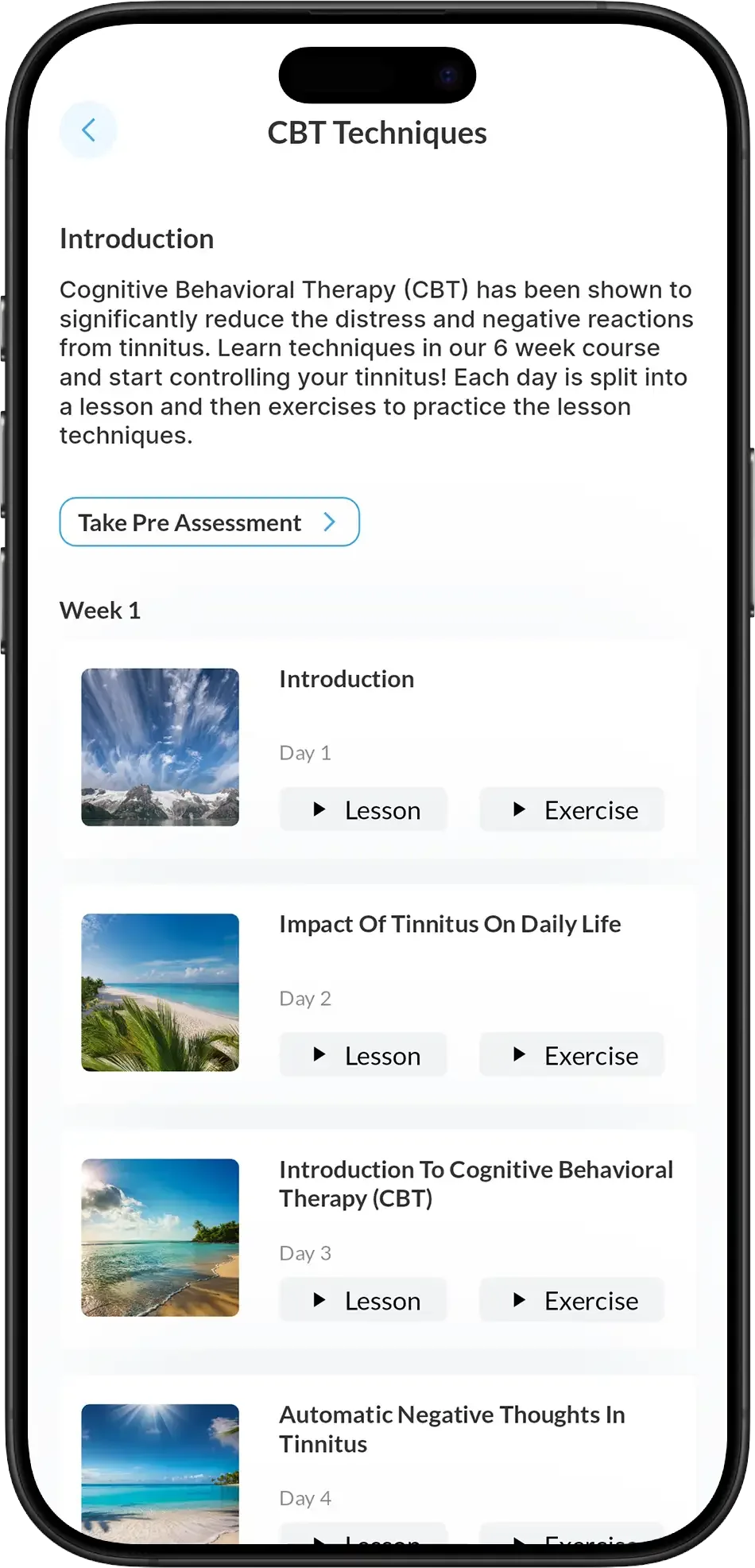
The Sound That Never Stops
Tinnitus is common, and it can disrupt sleep, focus, and mood.
The phantom sound affects 12-30% of adults
Sleep Disruption
Constant ringing makes it difficult to fall asleep and stay asleep, leading to chronic fatigue.
Concentration Issues
The phantom sounds make it hard to focus on work, conversations, and daily activities.
Emotional Impact
Anxiety, depression, and isolation often accompany chronic tinnitus symptoms.
Evidence-Based Relief
Learn research-backed techniques to change how your brain responds to tinnitus.
CBT Techniques
Learn cognitive behavioral therapy methods supported by randomized trials and systematic reviews.
- Thought restructuring
- Attention redirection
- Relaxation techniques
Progress Tracking
Monitor your improvement with a validated assessment tool throughout your 6-week journey.
- Measure symptom severity
- Track changes over time
- Test at any time
Expert Guidance
Content developed by a neurotologist (ear surgeon) specializing in tinnitus management.
- Medical oversight
- Research-backed content
- Regular updates
Built on Science
Our approach is grounded in rigorous clinical research and proven methodologies.
Review what 28 randomized trials show about our CBT approach
Research Highlights
28 randomized trials, 2,733 participants
CBT reduced tinnitus distress and quality-of-life burden across the strongest overall evidence base.
492 adults in a real clinical setting
Specialized CBT-based care outperformed usual care over 12 months.
Individual, group, and internet CBT all matter
Multiple CBT formats beat passive controls, with no single format clearly best for everyone.
What CBT Actually Targets
Not the sound alone
The literature is strongest for distress, sleep, attention, and quality of life, not for guaranteed silence.
The threat response
CBT helps break the loop between tinnitus, fear, monitoring, poor sleep, and loss of control.
Daily function
The practical goal is a life where tinnitus matters less, not a headline-friendly promise of a cure.
Why Digital Delivery Matters
Guided internet CBT works
Remote, structured CBT has randomized evidence behind it. Digital care is now a credible access path, not a fallback.
Smartphone evidence is improving
Newer app-based randomized trials suggest structured mobile care can reduce tinnitus burden outside specialty clinics.
Access changes outcomes
When treatment is easier to start and easier to repeat, more people can actually use the skills that the trials support.
Your Journey to Quieter Days
A structured 6-week program designed to teach you effective coping strategies.
Understanding Your Tinnitus
Learn about the science behind tinnitus and why traditional treatments often fall short.
Cognitive Techniques
Practice thought restructuring and attention management exercises proven to reduce distress.
Behavioral Strategies
Implement relaxation techniques and sleep hygiene practices for comprehensive relief.
Long-term Maintenance
Build sustainable habits that continue to provide relief beyond the initial 6-week program.
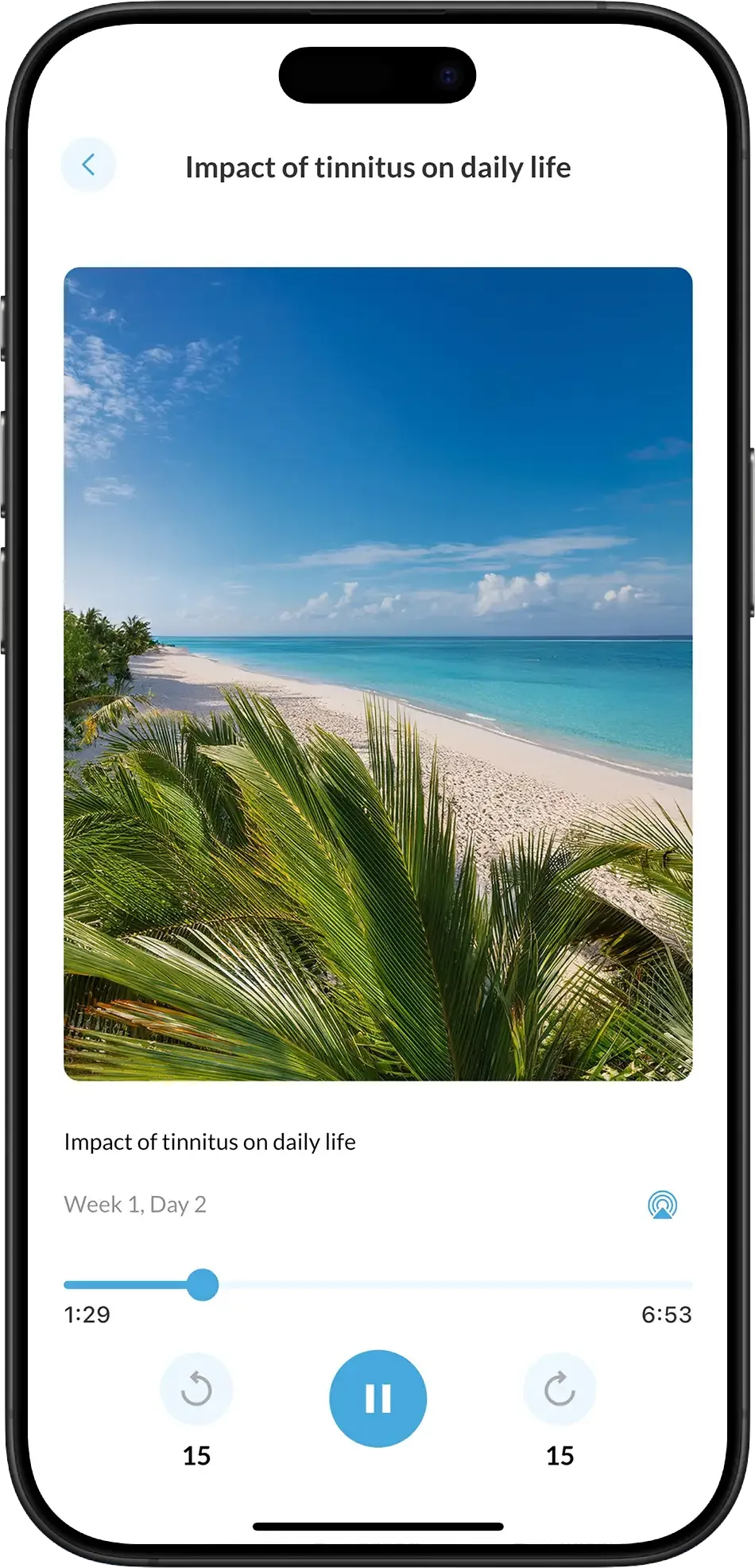
Start Your Journey to Quieter Days
Start learning evidence-based CBT techniques for managing tinnitus with more structure and less guesswork.

Unlimited access to the first 3 days of content. No credit card. No email. No hassle.
Pay once to unlock the full 6-week program and keep it for life.
Created by an ear surgeon, built to revisit whenever tinnitus flares.