
Tinnitus Statistics: You're Not Alone in This Journey
A source-checked look at how common tinnitus is, who it affects, and what the most reliable treatment research actually shows.
When tinnitus is loud at 3 AM, it feels intensely personal and intensely isolating. The data says otherwise. Tinnitus is common, globally distributed, and especially common in people with hearing loss or long-term noise exposure.
What matters is using statistics that are actually sourced, because tinnitus numbers vary a lot depending on how researchers define the condition.
The global picture
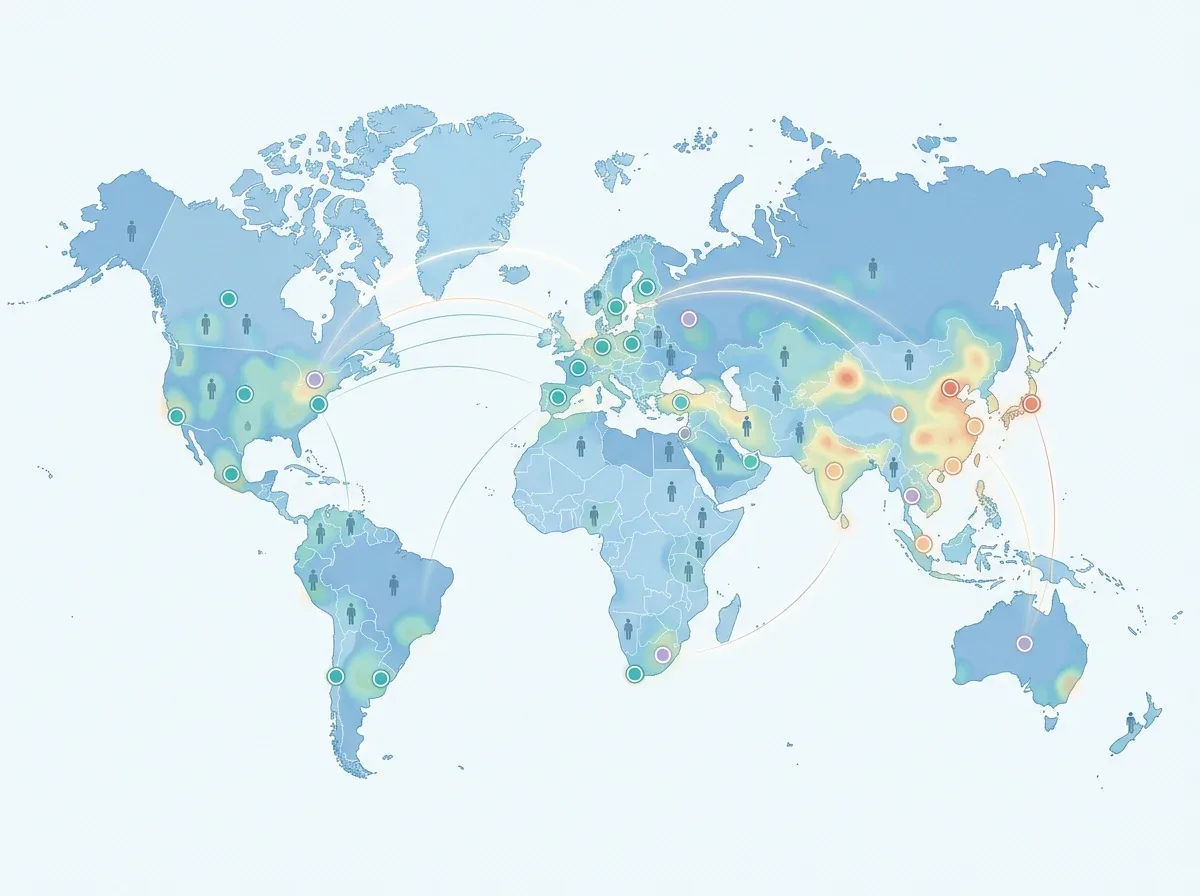
The strongest big-picture source right now is a 2022 systematic review and meta-analysis. It found:
- about 14.4% of adults worldwide experience tinnitus
- that works out to more than 740 million adults globally
- about 2.3% of adults have severe tinnitus, or more than 120 million people
That review also showed something clinicians see every day: prevalence rises with age.
Why US numbers do not always match
You will see very different US prevalence estimates online, and that does not automatically mean one site is lying. Sometimes researchers ask about "any tinnitus ever." Sometimes they ask about frequent or bothersome tinnitus. Sometimes they use different survey years.
Two commonly cited US sources illustrate the point:
- A national NHANES analysis estimated that about 50 million US adults had experienced tinnitus and 16 million reported frequent tinnitus.
- A newer population-level analysis of the 2014 National Health Interview Survey estimated 11.2% prevalence, or roughly 27 million US adults, depending on the definition used.
The trustworthy takeaway is not one magical number. It is that tinnitus affects millions of Americans, and the exact total depends on how the question is framed.
Who is more likely to be affected?
The better US and global studies point in the same direction. Risk goes up with:
- older age
- hearing loss
- occupational or recreational noise exposure
- some cardiometabolic and mental-health risk factors
The older NHANES analysis found tinnitus was more common in people with hearing impairment, hypertension, former smoking, generalized anxiety disorder, and loud leisure-time, firearm, or occupational noise exposure. The newer 2024 US analysis again linked tinnitus to demographic, medical, and noise-exposure patterns.
For patients, the practical point is simple: tinnitus is not random bad luck for most people. It usually sits in a broader context of hearing health, noise history, and stress burden.
Noise exposure still matters
Tinnitus is not only a problem of aging. Noise exposure remains one of the clearest modifiable risks.
That means the high-risk groups are not mysterious:
- musicians and music-industry workers
- military personnel and veterans
- construction, factory, and transport workers
- anyone spending years around loud tools, firearms, venues, or headphones
If you already have tinnitus, hearing protection is not a cosmetic habit. It is relapse prevention.
The treatment numbers worth trusting
This is where many tinnitus roundup articles go off the rails. They present exact success rates for every treatment, usually without a real source. The evidence is better than that, but also more modest.
The strongest treatment evidence is for CBT:
- Fuller et al. 2020 pooled 28 randomized trials and found CBT reduces tinnitus distress and quality-of-life burden.
- Cima et al. 2012 showed specialized CBT-based care outperformed usual care in a large real-world trial.
- Landry et al. 2020 showed that individual, group, and internet-delivered CBT all have evidence behind them.
The honest summary is this:
- CBT is the best-supported treatment for tinnitus distress
- hearing aids and sound therapy can help, especially when hearing loss is part of the picture
- app-based and internet-delivered CBT now have enough evidence to be taken seriously
- there is still no single cure rate that applies to every patient
What these statistics should mean to you
The data does not say "everyone gets better fast." It says something more useful:
- you are not unusual
- your condition has been studied seriously
- good treatment focuses on burden, function, sleep, and quality of life
- evidence-based help exists even if a universal cure does not
That is why I care less about flashy percentages and more about whether a treatment has randomized trials, systematic reviews, and realistic goals behind it.
References
- Jarach CM, Lugo A, Scala M, et al. Global Prevalence and Incidence of Tinnitus: A Systematic Review and Meta-analysis. JAMA Neurology. 2022.
- Shargorodsky J, Curhan GC, Farwell WR. Prevalence and characteristics of tinnitus among US adults. The American Journal of Medicine. 2010.
- Batts S, Stankovic KM. Tinnitus prevalence, associated characteristics, and related healthcare use in the United States: a population-level analysis. The Lancet Regional Health - Americas. 2024.
- Fuller T, Cima R, Langguth B, Mazurek B, Vlaeyen JWS, Hoare DJ. Cognitive behavioural therapy for tinnitus. Cochrane Database of Systematic Reviews. 2020.
- Cima RFF, Maes IH, Joore MA, et al. Specialised treatment based on cognitive behaviour therapy versus usual care for tinnitus: a randomised controlled trial. The Lancet. 2012.
- Landry EC, Sandoval XCR, Simeone CN, et al. Systematic Review and Network Meta-analysis of Cognitive and/or Behavioral Therapies (CBT) for Tinnitus. Otology & Neurotology. 2020.
If you want a practical next step instead of more statistics, Reductinn packages evidence-based CBT techniques into a structured tinnitus program you can actually use.
Ready to take control?
Reductinn teaches these evidence-based techniques and more through a structured program designed by medical experts.