
How to Stop Tinnitus: What Actually Works (According to Science)
A neurotologist explains the evidence-based methods that can reduce tinnitus distress. From CBT to sound therapy to lifestyle changes, here's what the research supports.
By Yuan Liu, MD
Short answer: no single treatment works for everyone, but CBT has the strongest evidence for tinnitus distress, while hearing aids and sound-based strategies can help selected patients. The honest framing is management, not cure.
The Myth That Nearly Killed My Career
"Just learn to live with it."
That's what the senior ENT told me when I developed tinnitus during my residency. High-pitched, relentless, like someone left a CRT television on inside my skull. I was 28, supposedly at the peak of my medical training, and I couldn't concentrate enough to read patient charts.
Here's the dirty secret about tinnitus treatment: For decades, doctors have been telling patients there's nothing to be done because we were looking for the wrong thing. We wanted a pill, a surgery, a single intervention that would silence the ringing. We were searching for a cure when we should have been perfecting the art of control.
Years later, I can tell you this much confidently: while we can't always eliminate tinnitus completely, many people can stop it from controlling their lives. The difference between those two statements might seem semantic. For someone lying awake at 3 AM, it's everything.
The Truth Nobody Wants to Admit
Let me be brutally honest in a way most medical articles won't: "How to stop tinnitus" is the wrong question. It's like asking "how to stop aging" or "how to stop thoughts." The better question—the one that actually has answers—is "how to stop tinnitus from ruining your life."
This isn't defeatism. It's precision.
When researchers evaluate tinnitus treatment, they usually ask a different question: are you sleeping better, concentrating better, and feeling less trapped by the sound? That is the framework used in Fuller's 2020 Cochrane review, and it's why "management" is not a consolation prize. It's the outcome the best studies are actually designed to improve.
Think about that. For many people, fighting tinnitus all day only makes it feel bigger.
The Four Pillars That Actually Work
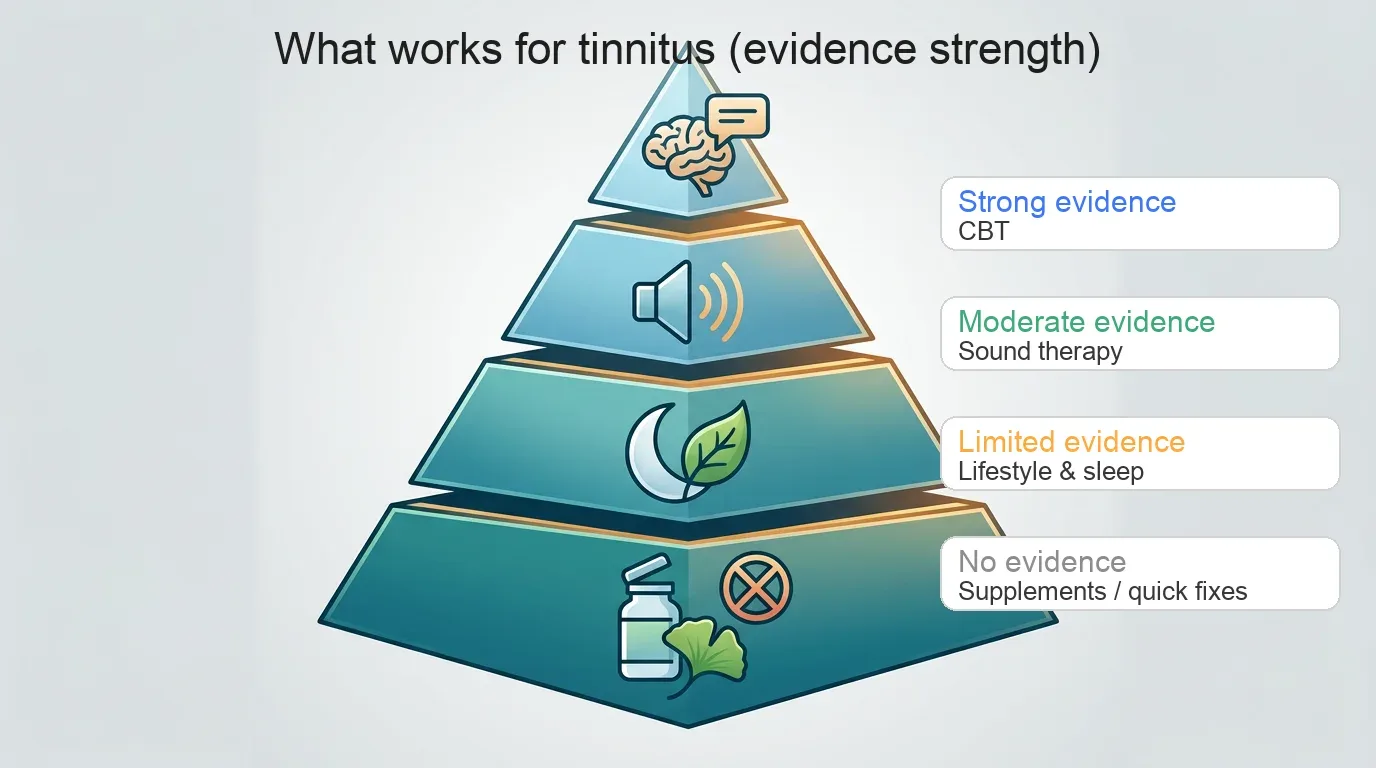
After reviewing the modern tinnitus literature and years of clinical practice, four approaches consistently rise above the noise (pun intended):
1. Cognitive Behavioral Therapy: The Unexpected Champion
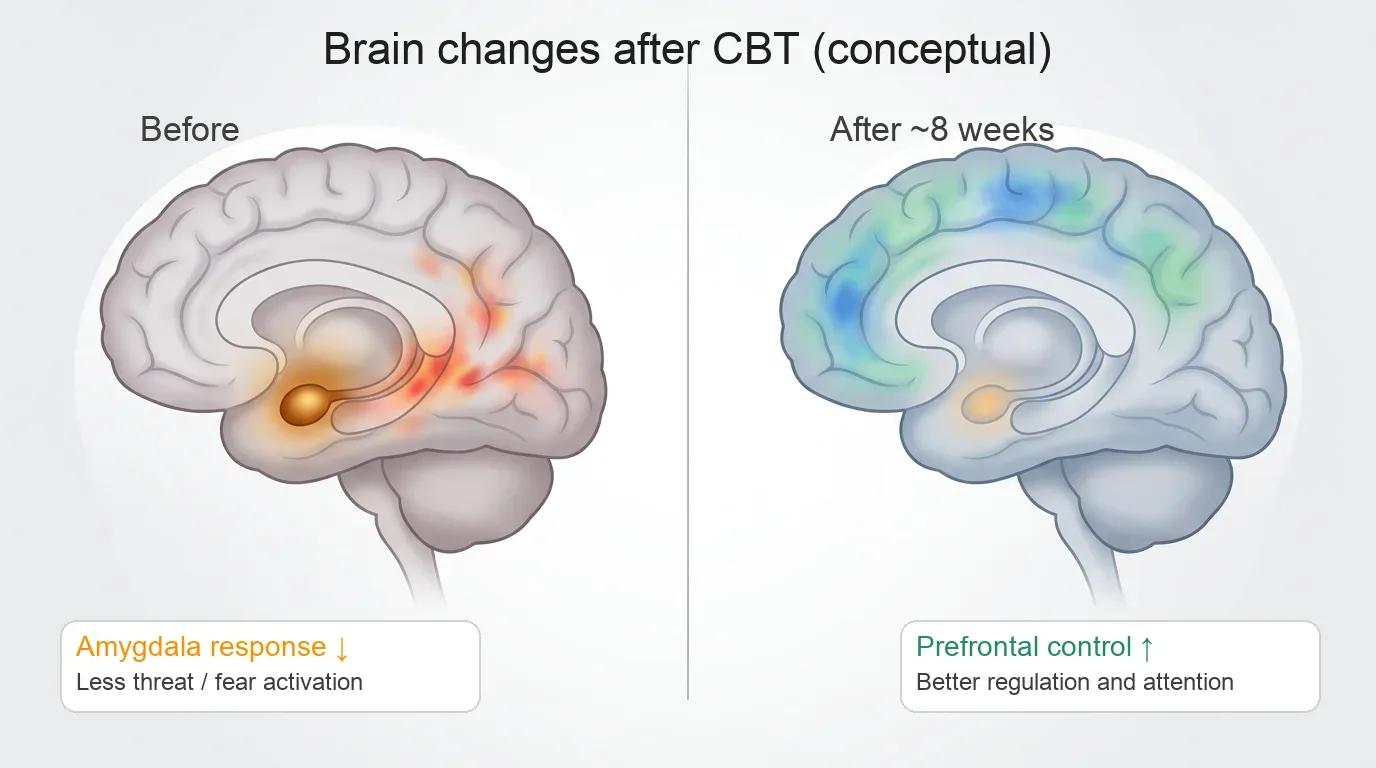
I used to roll my eyes at CBT for tinnitus. How could talking about a physical symptom make it better? Then I saw the brain scans.
Fuller's landmark Cochrane Review didn't just show CBT works. It showed CBT has the strongest evidence base we currently have for reducing tinnitus distress. Across 28 trials with 2,733 participants, CBT consistently improved quality of life and tinnitus-related burden with adverse effects uncommon where reported, although some participants deteriorated.
But here's what the studies don't capture: CBT doesn't work because it's therapy. It works because it's brain retraining.
Your tinnitus isn't just in your ears—it's a whole-brain phenomenon involving:
- Auditory cortex (processing the phantom sound)
- Limbic system (assigning emotional weight)
- Prefrontal cortex (attention and control)
- Default mode network (rumination and distress)
CBT helps because tinnitus is processed by more than the ear alone. Modern reviews describe tinnitus as involving auditory, attention, and emotion-related networks; when the threat response changes, the sound often becomes less intrusive even if it does not disappear completely. A 2024 scoping review reached the same practical conclusion: CBT and structured self-help consistently target the distress loop rather than promising silence.
For detailed evidence on why CBT has become the gold standard, see our comprehensive analysis: CBT for Tinnitus: What 28 Randomized Trials Actually Show.
How to start CBT today:
- Download a specialized app (like Reductinn) for guided exercises
- Practice thought challenging: When you think "This will never get better," actively counter with "Many people successfully manage tinnitus"
- Use attention training: Deliberately shift focus between your tinnitus and external sounds
- Keep a tinnitus diary: Track patterns between thoughts, behaviors, and tinnitus intensity
2. Sound Therapy: Beyond White Noise Machines
Most people try sound therapy wrong. They blast white noise to "drown out" the tinnitus, which is like trying to forget a headache by hitting yourself with a hammer.
Effective sound therapy is subtle, strategic, and personalized:
The Mixing Point Method Set your sound therapy just below your tinnitus level—you should hear both the external sound and your tinnitus, with neither dominating. This trains your brain to treat tinnitus as background noise rather than a threat signal.
Evidence-Based Sound Options:
Pink Noise (Best overall)
- Lower frequencies than white noise
- Often easier to tolerate at bedtime than white noise
- Sounds like: Steady rainfall
Brown Noise (Best for sleep)
- Even lower frequencies
- Particularly effective for low-pitched tinnitus
- Sounds like: Ocean waves
Notched Music Therapy (Most innovative)
- Your favorite music with your tinnitus frequency removed
- Early proof-of-concept studies suggested benefit for some tonal tinnitus patients, but later randomized work has been more mixed
- Requires frequency matching but worth it
Nature Sounds (Most pleasant)
- Psychologically calming beyond just masking
- Variable patterns prevent habituation
- Water sounds particularly effective
Pro tip from my practice: Layer two sound sources at different volumes. Near sound (bedside) at low volume for consistency, far sound (across room) slightly louder for variety. This creates a 3D soundscape that prevents fixation on any single sound—including your tinnitus.
3. Lifestyle Modifications That Move the Needle
Here's what actually makes a measurable difference, based on controlled studies not anecdotes:
Sleep Optimization (Biggest Impact)
Poor sleep can make tinnitus feel louder and harder to tolerate. But generic sleep advice often fails for tinnitus sufferers. You need a specific protocol:
- Temperature: 65-68°F (cooler than most people keep bedrooms)
- Sound environment: Consistent, not silent
- Pre-sleep routine: 90 minutes of deliberate wind-down
- The 20-minute rule: Can't sleep? Get up. Don't suffer in bed
Stress Management (Second Biggest Impact)
Daily-life studies show that tinnitus distress rises and falls with emotional state, which is why stress reduction matters even when it doesn't change the sound instantly. But "just relax" isn't a strategy. You need specific techniques:
- 4-7-8 Breathing: Physiologically triggers parasympathetic response
- Progressive muscle relaxation: 15 minutes daily, ideally before bed
- Exercise: 150 minutes moderate cardio weekly minimum
- Mindfulness meditation: Even 10 minutes daily shows measurable improvement
Dietary Factors (Smaller But Real Impact)
Despite what supplement companies claim, no food cures tinnitus. But certain dietary changes consistently help:
- Reduce salt: High sodium increases inner ear fluid pressure
- Stay hydrated: Many patients notice tinnitus feels worse when they're run down or dehydrated
- Time your caffeine: None after 2 PM if you have sleep issues
- Limit alcohol: Especially red wine (vasodilation effect)
- Anti-inflammatory foods: Good for overall health, though tinnitus-specific evidence is limited
What Doesn't Work (Save Your Money):
- Ginkgo biloba (multiple studies show no benefit)
- Lipoflavonoids (pure marketing)
- Zinc (unless you're deficient—test first)
- Apple cider vinegar (zero evidence)
- Most supplement "stacks"
4. Medical Interventions: When to Seek Help
Some cases require medical intervention. Here's when to see a doctor and what actually helps:
See a Doctor Immediately If:
- Sudden onset with hearing loss (emergency—steroids needed within 72 hours)
- One-sided tinnitus (rule out acoustic neuroma)
- Pulsatile tinnitus (matches heartbeat—vascular cause)
- Tinnitus after head trauma
- Associated with dizziness or facial weakness
Treatments With Actual Evidence:
For Acute Tinnitus (Less Than 6 Months)
- Corticosteroids: If started within 2 weeks of onset
- Prompt treatment of underlying causes: Ear infections, wax buildup, TMJ
- Early CBT intervention: Better outcomes than waiting
For Chronic Tinnitus
- Hearing aids: If any hearing loss present (even mild)
- Bimodal neuromodulation: Devices like Lenire can help some patients, but they should be framed as symptom management rather than a cure
- Targeted medications: Only for specific subtypes (anxiety-related, etc.)
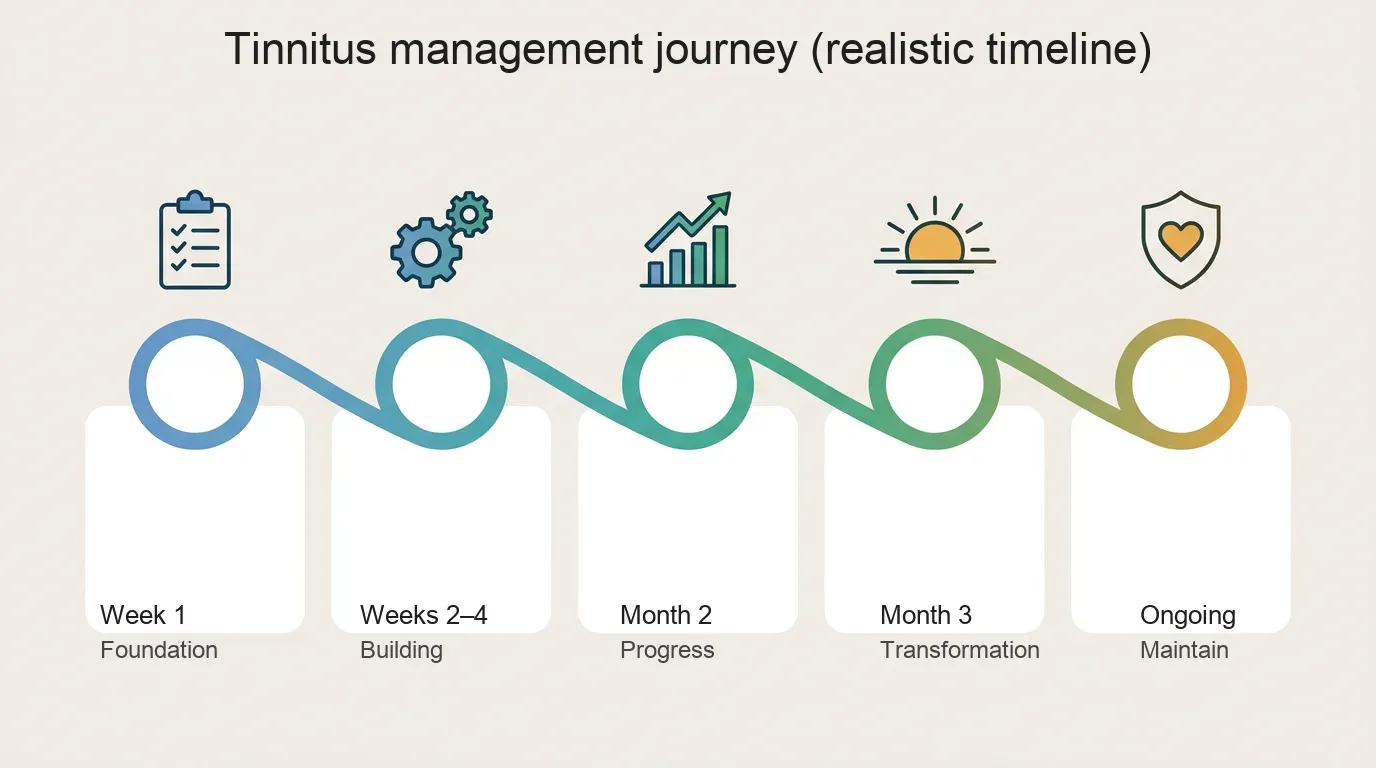
The Complete Protocol: Your 30-Day Action Plan
Here's exactly what I tell my patients to do, in order of impact:
Week 1: Foundation
Day 1-3: Assessment
- Track your tinnitus hourly (1-10 scale)
- Note all potential triggers
- Establish baseline sleep/stress levels
- Download a CBT app (like Reductinn) to begin structured exercises
Day 4-7: Sound Environment
- Set up bedroom sound therapy
- Test different sound types
- Find your "mixing point" volume
- Eliminate complete silence periods
Week 2: Behavioral Changes
Sleep Protocol
- Implement 90-minute wind-down
- Set consistent sleep/wake times
- Apply the 20-minute rule
- Track sleep quality vs. tinnitus
Stress Reduction
- Start 4-7-8 breathing (3x daily)
- Add 10-minute mindfulness session
- Begin regular exercise if not already
- Practice one CBT technique daily
Week 3: Optimization
Fine-Tuning
- Adjust sound therapy based on results
- Identify and eliminate triggers
- Modify diet if patterns emerge
- Increase CBT practice intensity
Professional Help (If Needed)
- Schedule audiologist appointment
- Consider hearing evaluation
- Discuss medical options
- Join support group (online or local)
Week 4: Long-term Strategy
What's Working
- Continue successful interventions
- Gradually reduce less effective ones
- Build sustainable routines
- Plan for setbacks (they're normal)
Track Progress
- Compare to week 1 baseline
- Celebrate improvements (even small ones)
- Adjust expectations based on results
- Commit to 3-month minimum
Why Some People Improve and Others Don't
Certain patterns show up repeatedly:
Those Who Improve:
- Accept the marathon, not sprint mentality (improvements compound over months)
- Use multiple approaches simultaneously (CBT + sound + lifestyle)
- Track objectively (diary, not memory)
- Stay consistent (daily practice, not sporadic)
- Focus on function, not silence (life quality vs. tinnitus volume)
- Get professional guidance (even if just initially)
Those Who Struggle:
- Try one thing briefly, then switch (nothing gets time to work)
- Seek miracle cures (vulnerable to scams)
- Catastrophize ("My life is ruined")
- Isolate (avoid activities due to tinnitus)
- Monitor obsessively (constant checking makes it worse)
- Give up too soon (most benefits appear after 4-8 weeks)
The Bottom Line
While we can't definitively "stop" tinnitus for everyone, many people can stop it from controlling their lives. The research is clear: a combination of CBT, strategic sound therapy, lifestyle optimization, and medical intervention when appropriate gives you the best chance of reclaiming your peace.
Millions of people live well with tinnitus. The difference is rarely luck. It's usually finding the right combination of evidence-based techniques and sticking with them long enough to work.
Your tinnitus doesn't define you. With the right approach, it doesn't have to limit you either.
Ready to start your journey? Reductinn combines all these evidence-based techniques into a comprehensive program that fits in your pocket. Try your free trial.
Ready to take control?
Reductinn teaches these evidence-based techniques and more through a structured program designed by medical experts.